
Commercial Low-Slope Roofing
TPO Roofing Systems for DFW Commercial Properties
Reflective, reinforced single-ply roofing with heat-welded seams for offices, retail centers, warehouses, apartments and industrial buildings.
What Is TPO Roofing?
A Reinforced Single-Ply Membrane for Low-Slope Roofs
TPO stands for thermoplastic polyolefin. It is a reinforced, single-ply roofing membrane designed for commercial and low-slope roofs.
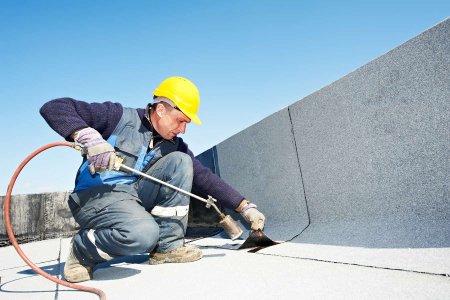
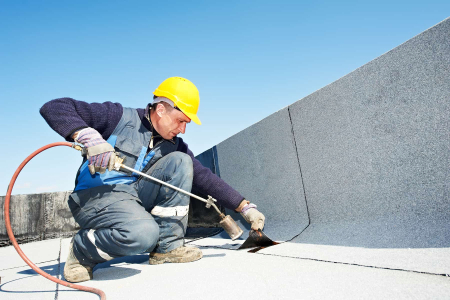
The sheets are joined using controlled hot-air welding. This fuses the overlapping membrane into a continuous seam rather than relying only on tape or adhesive.
TPO is widely used because it provides strong weather resistance, reflective color options and several installation methods at a competitive system cost.
Comparing membrane systems? See our flat and low-slope roofing guide, or browse all roofing products.
Why TPO Works in DFW
Reflective, Reinforced and Heat-Welded
Reflective Surface
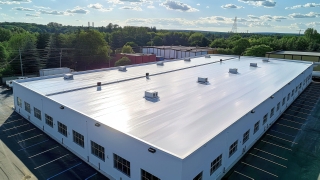
White TPO reflects a significant amount of solar energy compared with dark roofing. This can reduce heat absorbed through the roof assembly, although actual energy savings depend on insulation, HVAC efficiency, building use and other factors.
Heat and UV Resistance
Modern TPO systems are formulated for long-term exposure to heat, ultraviolet radiation, ozone and outdoor weathering.
Heat-Welded Seams
Field seams and flashing components are joined with hot-air welding. Welds must be tested during installation to verify continuity.
Reinforced Construction
A reinforcing scrim is embedded within the membrane to provide dimensional stability, tensile strength and puncture resistance.
Multiple Thicknesses
TPO is commonly manufactured in 45-mil, 60-mil and 80-mil thicknesses.
Greenleaf typically evaluates 60-mil and 80-mil membranes for long-term commercial applications. The correct thickness depends on roof traffic, hail exposure, warranty requirements, building use and budget.
Complete System Options
TPO Is a Complete Roof Assembly
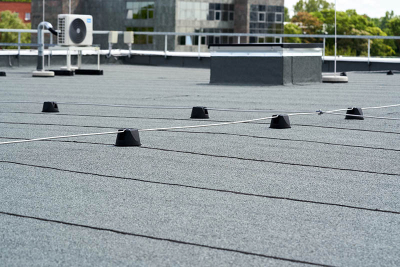
A TPO roof may include:
- Roof deck
- Air or vapor-control layer when required
- Polyiso insulation
- Tapered insulation for drainage
- High-density cover board
- Attachment system or adhesive
- Reinforced TPO membrane
- Heat-welded seams and flashings
- Drains, scuppers and edge metal
- Walkway pads around service areas
Installation Methods
Four Ways a TPO System Is Attached
Mechanically Attached
The insulation and membrane are secured using approved plates and fasteners. The adjoining sheet covers the fastening row before the seam is heat-welded.
Fully Adhered
The membrane is bonded across the approved substrate. Fully adhered systems provide a smooth appearance and limit billowing between attachment points.
Induction Welded
Special membrane-coated plates are mechanically fastened into the roof assembly and welded to the underside of the membrane using induction equipment.
Roof Recover
Some existing roofs can receive a new TPO recover system using an approved separation layer, cover board or fleece-backed membrane.
A recover is only appropriate after evaluating trapped moisture, deck condition, existing roof layers, drainage, code requirements and manufacturer specifications.
When to Choose TPO
Buildings That Commonly Use TPO Roofing
TPO is commonly used on:
- Office buildings
- Retail centers
- Warehouses
- Multi-family properties
- Churches
- Schools
- Medical offices
- Light-industrial buildings
- Metal-roof retrofit projects
TPO is one of several membranes we install as part of our commercial roofing work across the metroplex.
Why Greenleaf Roofing?
Low-Slope Roofing Requires Complete System Planning
Greenleaf Roofing installs and services commercial low-slope roofing systems throughout Dallas-Fort Worth.
Our TPO process includes:
- Existing-roof assessment
- Core cuts or moisture evaluation when required
- Drainage and ponding-water review
- Roof-deck inspection
- Insulation-value planning
- Wind-uplift and attachment review
- Manufacturer system selection
- Detailed flashing design
- Heat-weld testing
- Final inspection and documentation
- Manufacturer warranty coordination when applicable
We plan around tenants, customers, operating hours, equipment, deliveries and required access to limit disruption.
Greenleaf Roofing has been solving complex roofing problems in DFW since 2013.
Repair, Recover or Replace?
Document the Conditions Before Choosing a System
Repair
A repair may be appropriate when damage is isolated and the surrounding membrane, insulation and deck remain serviceable.
Recover
A recover may be appropriate when the existing roof is dry, stable and permitted to remain under current code and manufacturer requirements.
Replacement
Complete removal is generally the better choice when the roof contains widespread moisture, deteriorated insulation, multiple existing layers, failed attachment or significant deck damage.
Greenleaf documents the existing conditions and explains the practical options before recommending a system.
Weighing other low-slope membranes? Compare TPO with PVC, modified bitumen and built-up systems on our flat roofing page.
Frequently Asked Questions
TPO Roofing Questions
Service life depends on membrane thickness, installation, drainage, roof traffic, maintenance, hail exposure and the complete assembly.
The written warranty should not be treated as a guaranteed service-life prediction.
A thicker membrane provides more material above the reinforcing scrim and generally improves puncture and weathering resistance. The best choice depends on the project rather than thickness alone.
Yes, qualifying metal roofs can sometimes receive a retrofit system using insulation, cover board and a fully adhered or mechanically attached TPO membrane.
Structural condition, existing moisture, fastener movement and roof geometry must be evaluated first.
A reflective membrane may reduce roof-surface temperature and heat gain. Actual savings depend on the entire building and should not be guaranteed without an energy analysis.
Yes. Commercial roofs should be inspected regularly and after major storms.
Drains, seams, flashings, penetrations and areas around mechanical equipment need continued attention.
Manufacturer-backed warranties may be available on qualifying systems. The term and coverage depend on the manufacturer, membrane, assembly, installer status and final inspection.
Get a Clear Commercial Roofing Plan
Greenleaf Roofing will inspect the existing roof, document its condition and explain whether repair, recover or replacement provides the strongest value.